Chardonnay is the most planted white grape on earth, which is exactly why it confuses people. It tastes like wherever it’s grown.
Ask a room what Chardonnay tastes like and you’ll get two answers: buttery and oaky, or lean and mineral. Both are right, and neither describes Oregon Chardonnay particularly well. Oregon lands somewhere in between — and the reasons are specific enough to be worth a few minutes.
The climate does most of the work
The Willamette Valley is cool and maritime. Fruit ripens slowly here, which means sugar accumulates gradually while acidity hangs on.
That’s the whole ballgame. Warm regions produce Chardonnay with ripe, tropical fruit and softer acid. Cooler regions hold onto tension. Ours comes in at 13.5% alcohol — moderate, not weighty — with stone fruit, juicy peach and nectarine, rather than pineapple and butterscotch.
Slow ripening is also why Oregon growers pick by hand. When your window is narrow, you want people making decisions bunch by bunch.
Clone selection is a real lever, not a technicality
Most Chardonnay conversation skips straight to oak. The choice further upstream matters more.
Our 2024 uses Dijon clones 95 and 76, plus 96 and Mt. Eden. Dijon clones were brought to Oregon specifically because they ripen earlier — a practical answer to a cool climate with a short season. Mt. Eden brings a bit more weight and breadth to round the blend out.
That’s not trivia. It’s the difference between a wine that struggles to ripen and one that arrives balanced.
Texture over weight — what barrel fermentation actually does
Here’s where Oregon separates from the buttery reputation.
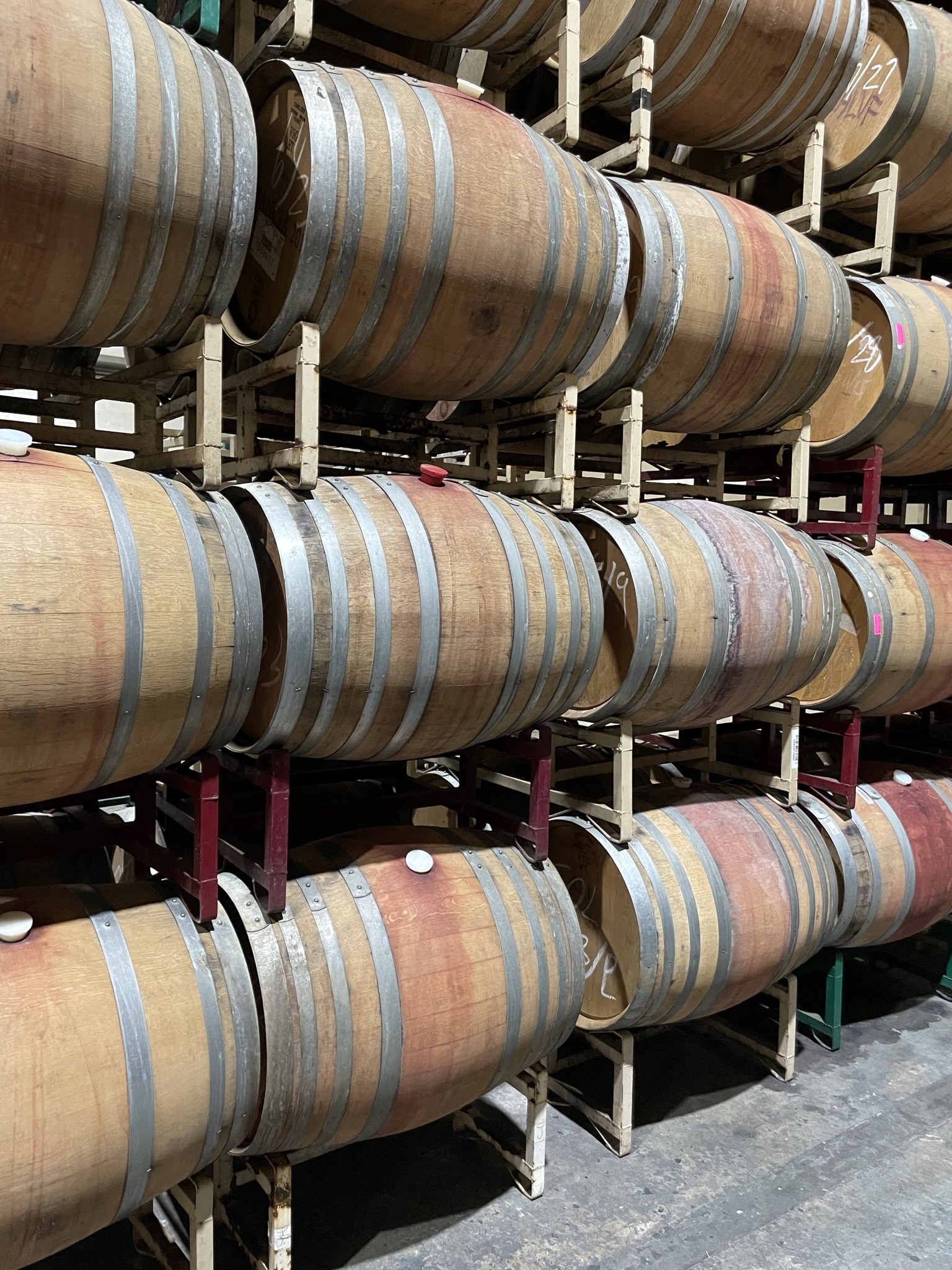
Our Chardonnay is whole-cluster pressed and fermented in French oak barrels, then aged on its lees for six months with weekly stirring. Only 15% of those barrels are new.
Three things worth pulling apart:
- Barrel fermentation, not just barrel aging. Fermenting in oak integrates it. The wine and the wood get acquainted early, so oak reads as texture rather than a flavor sitting on top.
- Sur lie aging. Resting on spent yeast and stirring it weekly builds a creamy, rounded mouthfeel. This is where richness comes from — texture, not sugar. The wine is fermented dry.
- 15% new oak. A restrained number on purpose. Oak is seasoning here, not the dish. You’ll notice a light touch of toast behind the stone fruit, not a plank of vanilla.
That combination is why people often read Oregon Chardonnay as rich and then get surprised by how clean the finish is.
So where does it actually sit?
Roughly: more texture than a steely Chablis, more restraint than a big Napa Chardonnay, and more red-fruit-friendly acid than either.
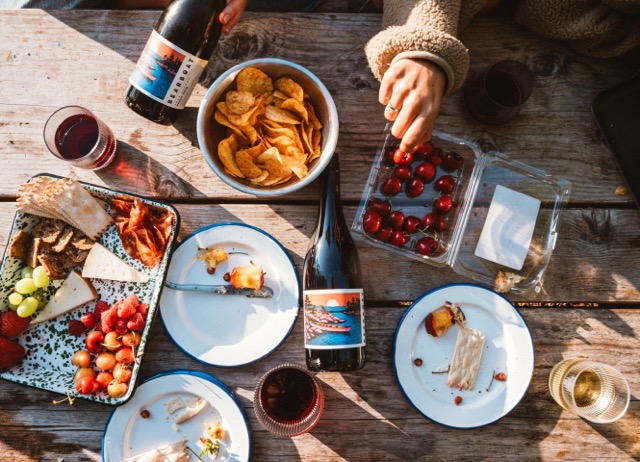
Which makes it genuinely useful at dinner. It handles grilled shellfish, roast chicken with herbs, and a cheese board without needing an occasion built around it — the same everyday logic behind our Pinot Noir.
Try it against your usual bottle
The fastest way to understand Oregon Chardonnay is a side-by-side. Open ours next to whatever Chardonnay you normally buy and look for two things: where the texture comes from, and how the finish lands.
See the full winemaking detail on our 2024 Chardonnay, or find a bottle near you.