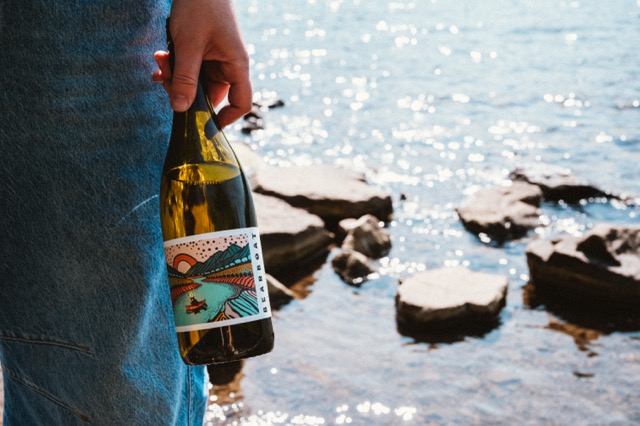
Picture two friends at a campsite, one bottle each, both red. One pours something deep purple that coats the glass and grips your gums a little on the way down. The other pours something you can almost read a map through, bright and silky, with cherry right up front. Both are good. Both are red. And they couldn’t be more different if they tried.
That, in a nutshell, is Pinot Noir vs. Cabernet Sauvignon. They’re the two reds most people learn first, the two you’ll see on almost every restaurant list, and the two that cause the most quiet confusion in the wine aisle. Mac and Zeke hear it at tastings all the time: “I like red, but I never know which one I like.”
Good news: you don’t need a wine course to figure it out. Pinot Noir is light-bodied, low in tannin and bright with red fruit. Cabernet Sauvignon is full-bodied, high in tannin and built around dark fruit. Neither one is “better.” They’re built for different jobs, different plates and, honestly, different moods. Below, we’ll walk through how they differ, what each is great at, and a simple way to figure out which one is yours.
Pinot Noir vs. Cabernet Sauvignon at a Glance
If you want the cheat sheet before the story, here it is:
- Body: Pinot Noir is light to medium. Cabernet Sauvignon is full.
- Tannin: Pinot Noir is low and soft. Cabernet Sauvignon is high and firm.
- Acidity: Pinot Noir is usually higher. Cabernet Sauvignon is moderate.
- Color: Pinot Noir is pale ruby, often see-through. Cabernet Sauvignon is deep, inky purple.
- Typical fruit: Pinot Noir leans cherry, raspberry and strawberry. Cabernet Sauvignon leans blackcurrant, black cherry and plum.
- Other notes: Pinot Noir can show mushroom, forest floor and baking spice. Cabernet Sauvignon often shows cedar, tobacco, mint or green bell pepper.
- Sweetness: Both are almost always dry.
- Best known regions: Pinot Noir from Burgundy and Oregon’s Willamette Valley. Cabernet Sauvignon from Bordeaux and California’s Napa Valley.
- Food sweet spot: Pinot Noir with salmon, chicken, mushrooms and pork. Cabernet Sauvignon with steak, burgers, lamb and aged cheese.
Wine Folly has a handy chart that lines up red wines from lightest to boldest, and these two sit near opposite ends of it. That’s a useful way to think about the whole comparison: same color family, opposite ends of the trail.
It Starts With the Grape
Most of what separates these two wines comes down to the grapes themselves, before a winemaker does anything at all.
Pinot Noir is thin-skinned and a little fussy. It grows in tight clusters, ripens early and doesn’t love extremes. Too hot and it turns jammy and flat. Too much rain and those thin skins are vulnerable. It does its best work in cool places with long, mild growing seasons, which is why the most famous Pinot Noir comes from Burgundy in France and, more and more, from Oregon. Because the skins are thin, there’s simply less color and less tannin to pull into the wine. Hence that see-through ruby glow.
Cabernet Sauvignon is thick-skinned and sturdy. It ripens late, likes warmth and sunshine, and handles a long, dry season with ease. Those thick skins carry a lot of color, a lot of tannin and a lot of flavor, which all ends up in the glass. That’s why Cabernet looks almost opaque and feels so substantial. It’s the backbone of Bordeaux’s famous blends and the signature grape of Napa Valley.
Here’s a fun bit of family history: Pinot Noir is ancient, more than 1,000 years older than Cabernet Sauvignon by most accounts. Cabernet Sauvignon is a relatively recent natural cross between Cabernet Franc and Sauvignon Blanc. If you want the deep dive on the older of the two, Wine Folly’s guide to Pinot Noir covers its long, winding backstory.
Body: The Weight You Feel
“Body” is just wine-speak for how heavy a wine feels in your mouth. A simple way to picture it: think skim milk, whole milk and cream. Light-bodied wines feel like skim milk. Full-bodied wines feel more like whole milk or cream.
Pinot Noir lands on the lighter side of that scale. It’s one of the lightest reds in wide production, closer in weight to some white wines than to a big Cabernet. That’s why you’ll sometimes hear it called “the white wine drinker’s red wine.” It’s easy to sip before dinner, and it won’t weigh you down by the second glass.
Cabernet Sauvignon sits firmly at the full end. It’s rich and mouth-filling, often with a bit more alcohol, and it feels substantial from the first sip. On a cold night with a hearty meal, that weight is exactly the point.
Tannin: The Biggest Difference of All
If you only remember one word from this post, make it tannin. Tannin is the drying, grippy feeling a red wine leaves on your gums and tongue, a bit like a strong cup of black tea. It comes mostly from grape skins and seeds, and partly from oak barrels. Wine Folly’s explainer on what wine tannins are is a great five-minute read if you want the science.
Cabernet Sauvignon has a lot of tannin, thanks to those thick skins. Young Cabernet can feel firm, even a little puckery on its own. That’s not a flaw. Tannin gives Cabernet its structure and its ability to age, and it’s the reason Cabernet and steak are such a famous match. Fat and protein soften tannin’s edges, so a juicy ribeye and a bold Cabernet each make the other taste better.
Pinot Noir has much less tannin, so it feels silky and smooth instead of grippy. That’s a big part of why Pinot works with such a wide range of food. It doesn’t need a fatty steak to balance it, so it can sit happily next to salmon, roast chicken, a mushroom risotto or a bowl of lentil soup. If tannin isn’t your favorite sensation, Wine Folly has a whole piece on why some people prefer low-tannin reds, and Pinot Noir is at the top of that list.
Acidity: The Mouthwatering Part
Acidity is the bright, zippy quality that makes your mouth water and makes you want another bite of whatever you’re eating. Think of it like a squeeze of lemon on fish. It keeps things lively.
Cool-climate grapes hold on to more natural acidity, so Pinot Noir tends to be the brighter, fresher of the two. That acidity is the secret behind its food-friendliness: it cuts through richness, resets your palate between bites and keeps the wine from feeling heavy.
Cabernet Sauvignon usually has moderate acidity. It leans more on tannin and fruit for structure, which gives it a rounder, more powerful feel. Different tools, same goal: a wine that feels balanced.
Flavor: Red Fruit vs. Dark Fruit
Every bottle is different, but each grape has a general flavor family.
Pinot Noir tends toward red and dark-red fruit: cherry, raspberry, strawberry, cranberry. Depending on where it grew and how it was made, you might also find earthy notes like mushroom or forest floor, a little baking spice, or a hint of rose. It’s the kind of wine that changes in the glass as you sip, which makes it fun to linger over.
Cabernet Sauvignon tends toward darker fruit: blackcurrant, black cherry, blackberry, plum. Oak aging often adds vanilla, cedar or a little cocoa, and Cabernet grown in cooler spots can show a savory, green-pepper or mint note. It’s bold and focused, the kind of wine that announces itself.
Which Is Sweeter, Pinot Noir or Cabernet?
Neither, really. This is one of the most common questions we get, and the answer surprises people: both Pinot Noir and Cabernet Sauvignon are almost always dry wines. That means yeast turned nearly all of the grape sugar into alcohol during fermentation, leaving little or no residual sugar (the sugar left over after fermentation finishes). Wine Folly’s chart of wines listed from dry to sweet puts both firmly on the dry side.
So why does Pinot Noir sometimes taste “sweeter”? It’s the fruit and the texture playing tricks. Bright cherry and raspberry flavors read as juicy, and low tannin means there’s nothing drying your mouth out. Cabernet’s darker fruit and firmer tannin can feel more serious by comparison, even though the actual sugar levels are about the same. We dig into the same trick with white wine in Is Chardonnay Sweet?, and the logic is nearly identical.
What Each One Is Great At
Reach for Cabernet Sauvignon when…
- There’s red meat with real fat on the table. Ribeye, prime rib, smash burgers, braised short ribs, a rack of lamb. Cabernet’s tannin and the meat’s richness were made for each other.
- The cheese board is all about aged, hard cheeses. Aged cheddar, Gouda or Parmigiano-Reggiano can stand up to Cabernet’s structure.
- You want to put a bottle away for years. High tannin acts like a natural preservative, so well-made Cabernet can age gracefully for a decade or more.
- It’s a cold night and you want something bold. Sometimes you just want a big, warming red by the fire, and Cabernet delivers.
Reach for Pinot Noir when…
- The menu is mixed or you’re not sure what’s being served. Pinot’s range makes it the safest red to bring to someone else’s table.
- Fish is on the menu. Pinot Noir is one of the few reds that reliably works with salmon, trout or tuna.
- Poultry, pork or mushrooms are the star. Roast chicken, duck, pork tenderloin and anything earthy are all in its wheelhouse.
- It’s a holiday spread with a dozen dishes. That’s why Pinot shows up in our guide to the best wine for Thanksgiving.
- You want a red before the food arrives. Light enough to sip on its own around the fire or the kitchen island.
For a deeper list of Pinot-friendly plates, see the best foods to pair with Oregon Pinot Noir. And if you want the general rules of the game, Wine Folly’s food and wine pairing basics boils it down nicely.
Can You Swap One for the Other?
Sometimes, but not always. If a recipe or a dinner calls for Cabernet because there’s a thick steak involved, a lighter Pinot Noir won’t cut through the fat in quite the same way. It’ll still taste fine, just a bit more delicate than the dish. A leaner cut, a steak with a mushroom sauce, or steak frites with a pile of fries are friendlier swaps for Pinot.
Going the other direction is harder. A big Cabernet next to a delicate piece of salmon or a lemony roast chicken can overwhelm the food and make the fish taste metallic. In that case, Pinot Noir is usually the better pick from the start.
The simplest rule: match the weight of the wine to the weight of the dish. Heavy, rich plates like a heavy, structured wine. Lighter plates like a lighter wine. Color matters less than you’d think. It’s the same reason a lightly oaked Chardonnay can handle roast chicken, which we cover in Chardonnay Food Pairing: What to Cook When You Open a Bottle.
Serving Tips for Both
No special gear needed. Just a little attention to temperature.
Chill Pinot Noir slightly. Light reds taste best a bit below room temperature, around 55 to 60°F according to Wine Folly’s serving temperature guide. Fifteen to twenty minutes in the fridge does it. Too warm and Pinot can taste flat and boozy.
Serve Cabernet a touch warmer. Fuller reds show best around 60 to 65°F, still a little cooler than most living rooms. A few minutes in the fridge on a warm day is plenty.
Give young Cabernet some air. Opening a young, tannic Cabernet half an hour early, or pouring it into a pitcher or decanter, can soften it. Pinot Noir usually doesn’t need that step. Pop it, pour it, enjoy it.
Glassware is optional. A bigger bowl helps both wines open up, but a tumbler at a campsite works just fine. Mac and Zeke have poured from enamel mugs more than once.
So… Which One Are You?
Here’s a quick, totally unscientific way to find out. Read each pair and notice which side you lean toward.
- Black coffee or a latte? (Black coffee leans Cabernet. Latte leans Pinot.)
- Dark chocolate or a bowl of fresh cherries? (Dark chocolate leans Cabernet. Cherries lean Pinot.)
- Steakhouse or bistro? (Steakhouse leans Cabernet. Bistro leans Pinot.)
- Bold or bright? (You can guess this one.)
- A deep leather armchair or a folding chair by the campfire? (Armchair leans Cabernet. Campfire chair leans Pinot, at least in our house.)
If you landed mostly on the Pinot side, you probably like reds that feel lively, smooth and easy to drink with all kinds of food. If you landed on the Cabernet side, you probably like reds with power, structure and a firm grip. And if you landed somewhere in the middle, congratulations: you get to drink both, depending on what’s for dinner.
The honest truth is that most people who love wine end up loving both. It’s less about picking a team and more about knowing which bottle fits the night in front of you.
Why Oregon Pinot Noir Is a Great Place to Start
If you’re curious about the Pinot side of this question, Oregon’s Willamette Valley is one of the best places on earth to explore it. Cool nights, Pacific marine air and long, mild growing seasons give the grape exactly the slow ripening it loves, which keeps the acidity bright and the fruit focused. The Oregon Wine Board’s Willamette Valley overview is a great primer, and we explain the valley in plain English in Willamette Valley Pinot Noir: Why Oregon Grows It This Well.
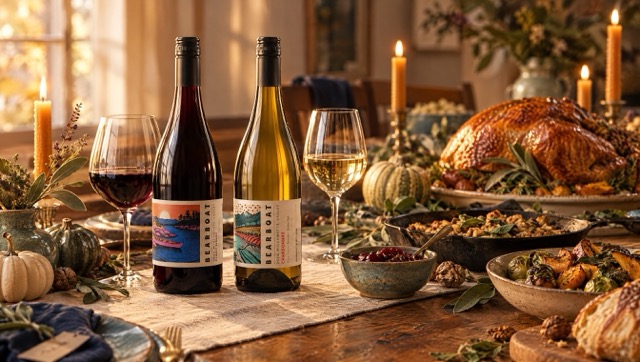
That’s where our 2024 Bearboat Pinot Noir comes from. Half the fruit comes from the Chehalem Mountains and half from the wider Willamette Valley, all of it dry-farmed and hand-picked from vineyard partners we walk ourselves from bud break to harvest. In the glass you’ll find dark cherry and black raspberry over a silky texture, held up by balanced acidity and easygoing tannins. It spends ten months in French oak, only a quarter of it new, so the fruit does the talking. It’s dry, it’s under screwcap, and it took a Gold Medal and 95 points at the 2026 New York International Wine Competition.
We make it the way we think Pinot Noir should be made: for the dinner table first. It’s the kind of red that belongs at an ordinary weeknight dinner as much as a holiday one. If you have more questions about the grape, start with Pinot Noir Questions You’re Too Embarrassed to Google. And if someone at your table drinks white, our Chardonnay is right there beside it.
Two Different Tables, No Wrong Answer
Pinot Noir and Cabernet Sauvignon aren’t rivals. They’re two very different trails that both lead somewhere good. Cabernet brings the power, the structure and the steakhouse swagger. Pinot Noir brings the brightness, the silk and the flexibility to show up at almost any table.
The best way to know which one you are is to taste them side by side. Open one of each with dinner this week, pour a little of both and see which glass empties first. Then find Bearboat near you or take a closer look at both of our wines. Mac and Zeke would pour it any night of the week.