Every November, Mac and Zeke get the same text from somebody in the family: “Can you bring the wine?” It sounds like the easy job. No brining, no rolling pin, no wrestling a 16-pound bird into an oven that suddenly feels too small. Then you’re standing in the wine aisle, staring at a few hundred bottles, trying to picture which one will make sense next to turkey, sweet potatoes with marshmallows on top, your aunt’s sharp vinegar-y green beans and a can-shaped cranberry sauce, all on the same plate.
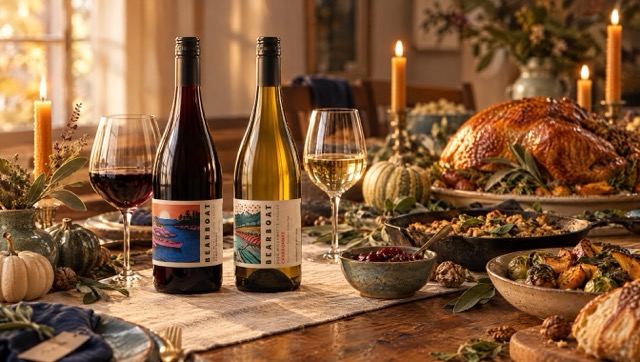
Here’s the good news: the Thanksgiving wine question has a real answer, and it fits on a sticky note. One light red, one bright white. Specifically, a Pinot Noir and a Chardonnay. Below is why that pairing works, how much to buy, how to serve it and a dish-by-dish cheat sheet you can screenshot and forget about until the day you need it.
Why Thanksgiving Breaks the Usual Pairing Rules
Most wine-and-food advice is built around one dish. A steak gets a big red. Oysters get a crisp white. Simple. Thanksgiving throws that out the window, because the plate isn’t one dish. It’s eight or nine of them, all arriving at once, and they don’t agree with each other on anything.
You’ve got lean white meat and rich dark meat. Salty gravy. Sweet casseroles. Tart cranberry. Earthy mushrooms and sage in the stuffing. Buttery rolls. Maybe a ham at the other end of the table, plus a vegetarian main for the cousin who stopped eating meat last spring. A wine that’s perfect with one of those things will be wrong with at least three others.
That’s why the big, heavy reds people often reach for on special occasions tend to struggle here. Lots of tannin (the drying, grippy feeling a strong red leaves on your gums) clashes with sweet sides and makes cranberry taste metallic. High alcohol feels hot next to a table that’s already warm from an oven that’s been running since 8 a.m. What you actually want is a wine that gets along with everybody, the friend at the party who can talk to anyone.
The two qualities that make a wine a good Thanksgiving guest are acidity and restraint. Acidity is the bright, mouthwatering quality that makes you want another bite. It cuts through gravy and butter the way a squeeze of lemon does. Restraint just means the wine doesn’t try to be the loudest thing on the table. Pinot Noir and Chardonnay, done well, bring both.
The Two-Bottle Answer
If you remember nothing else from this post, remember this: bring one Pinot Noir and one Chardonnay. Between them, they cover every dish on the table and every kind of wine drinker at it: the person who “only drinks red,” the person who “only drinks white” and the person who will happily drink whatever’s closest.
It also takes the pressure off. You don’t need to plan a pairing for each course or guess what your host is cooking. Set both bottles on the table, let people pour what they like and go back to arguing about football.
Pinot Noir: The Red That Plays Well With Everything
Pinot Noir is one of the lighter-bodied red wines, with soft tannins and plenty of natural acidity. That combination makes it a natural with turkey. It has enough flavor to stand up to dark meat and gravy, but it won’t flatten the white meat or bully the sides. Its red- and dark-fruit flavors also echo cranberry sauce instead of fighting it, which is a rare trick for a red wine.
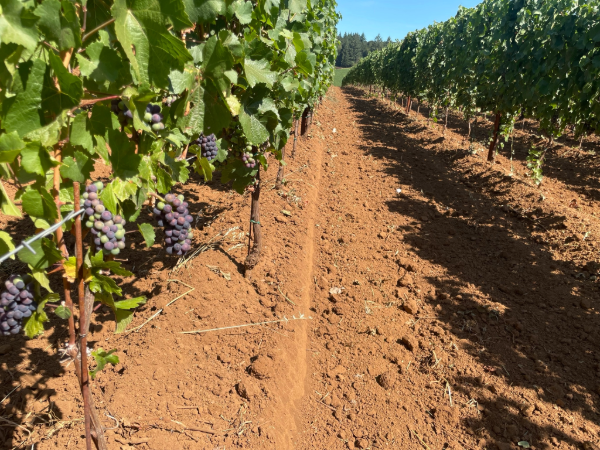
Our 2024 Bearboat Pinot Noir leans into exactly that: dark cherry and black raspberry, a silky texture and balanced acidity that keeps it bright from the first glass through the last slice of pie. It’s dry-farmed and hand-picked from vineyards in the Chehalem Mountains and the wider Willamette Valley, and it spends ten months in mostly neutral oak, so the fruit does the talking rather than the barrel.
Where it really shines: dark meat, mushroom-and-sage stuffing, roasted root vegetables, glazed ham and the cranberry sauce, whether it comes from a can or from a recipe someone guards like a family secret. If you’re still a little fuzzy on the basics (is Pinot Noir dry? should you chill it?), we answered those questions in plain English in Pinot Noir Questions You’re Too Embarrassed to Google.
Chardonnay: The White That Shows Up Early and Stays Late
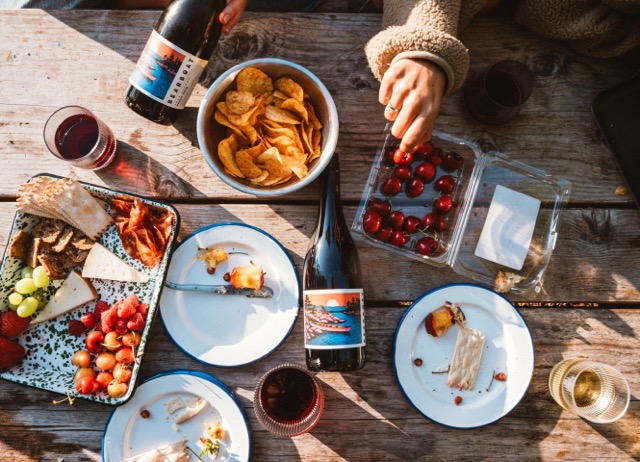
Chardonnay does a job a lot of people don’t think about: it covers the two hours before the turkey. The cheese board, the crackers, the dip, the standing-around-the-kitchen-island part of the day when everyone’s hungry and nobody’s allowed near the oven. A crisp, textured Chardonnay is perfect for that stretch, and it keeps going once dinner lands.
The key is style. A heavily oaked, buttered-popcorn Chardonnay can feel heavy by the second glass and turns sweet sides into a sugar contest. A lightly oaked Chardonnay with real acidity is a different animal. It has enough body to handle turkey breast and creamy casseroles, and enough freshness to clean your palate between bites.
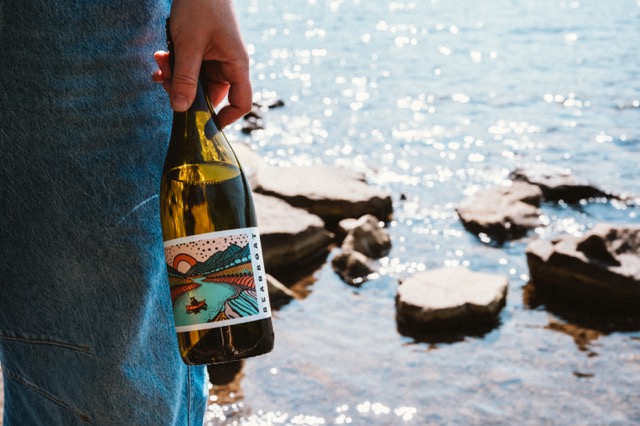
Our 2024 Bearboat Chardonnay is built that way: barrel-fermented and aged on its lees (the spent yeast left over from fermentation, which adds a rounder texture) with just a light touch of toast. In the glass you’ll find juicy peach, nectarine and crushed stone, finished off by crisp acidity. If you’ve written off Chardonnay because of one too many oak bombs, Oregon’s take might change your mind. We dig into why in What Makes Oregon Chardonnay Different?
Where it really shines: turkey breast, green bean casserole, mashed potatoes, buttery rolls, squash dishes, the cheese board and anything with a cream sauce.
A Dish-by-Dish Thanksgiving Wine Cheat Sheet
For the planners in the group, here’s how the two bottles split the table. (For everyone else: either bottle works with nearly all of it, so don’t overthink it.)
Want to keep the pairing ideas going past November? Our guide to the best foods to pair with Oregon Pinot Noir covers everything from salmon to mushroom risotto.
Why Oregon Wine Makes Sense on This Table
There’s a reason Oregon keeps showing up in Thanksgiving wine conversations. The Willamette Valley sits in a cool climate, with long, mild growing seasons and Pacific marine air sliding in through gaps in the Coast Range. Cool nights help grapes hold on to their natural acidity, and that bright, food-friendly quality is exactly what a crowded holiday table calls for.
Pinot Noir and Chardonnay are the two grapes the region is best known for, and they make up a big share of what’s planted there. If you want to go deeper on the valley itself, the Willamette Valley Wineries Association has a great overview of the region and its sub-areas, and the Oregon Wine Board covers the whole state, from growing regions to harvest updates.
For us, it comes down to something simpler. Oregon wine tends to taste like it was made to go with dinner, not to win a staring contest with it. That’s the whole idea behind Bearboat: wine crafted with care that belongs at an ordinary weeknight table as much as the holiday one. You can read more about how we work with vineyard partners across the valley on our Our Story page.
How Much Wine to Buy for Thanksgiving
A standard 750 ml bottle pours about five glasses. A rule of thumb that holds up well: plan on half a bottle per adult, then add two bottles for the table.
Why the extra two? Because someone always shows up empty-handed, someone only drinks white, and one bottle’s going straight into the gravy or the cranberry sauce. A rough split of half red, half white works for most families. If yours leans hard one way, tilt the ratio to match. Leftover wine doesn’t go to waste, and we’ll get to that.
Serving It Right (Without Turning It Into a Production)
You don’t need a decanter, a thermometer or special glasses. You just need a little timing.
Chill the Chardonnay properly. A few hours in the fridge gets it where it needs to be. If fridge space is gone by Wednesday night (it always is), a cooler with ice on the back porch or in the garage works just as well.
Chill the Pinot Noir a little too. This is the one most people skip. Light reds taste best a bit cooler than room temperature, around 55 to 60°F according to Wine Folly’s serving temperature guide. A kitchen that’s had the oven going all day runs warm, and warm red wine tastes flat and boozy. Fifteen to twenty minutes in the fridge before dinner fixes it.
Open the red early. Not because it needs to “breathe,” but because you’ll be too busy to remember later. Both of our wines are under screwcap, so there’s no hunt for a corkscrew while the gravy is on the stove.
A Simple Thanksgiving Wine Timeline
Bringing Wine as a Guest? Here’s the Etiquette
If you’re the one showing up at someone else’s door, a two-bottle Pinot-and-Chardonnay pair is about as safe a host gift as it gets. It covers both camps, and it doesn’t ask your host to rethink the menu. A few easy rules:
The Day After: Leftovers Deserve Good Wine Too
Here’s our favorite part of Thanksgiving, honestly. The house is quiet, the dishes are (mostly) done, and somebody’s building a turkey-stuffing-cranberry sandwich at the counter. That half-finished bottle of Pinot Noir? Screw the cap back on, keep it in the fridge, and it’ll taste great with that sandwich for the next day or two. Same goes for the Chardonnay alongside a bowl of turkey soup or a leftover-loaded grilled cheese.
That’s really the point. The bottles that work on the biggest food day of the year also work on every ordinary night after it. Good wine doesn’t need a holiday to justify opening it. Mac and Zeke would pour it any night of the week.
One Red, One White, Done
That’s the whole Thanksgiving wine question, settled. Bring a Pinot Noir and a Chardonnay. Chill them both (yes, the red too). Buy a little more than feels necessary. Then go help with the dishes, or at least look like you’re about to.
Ready to stock up? Find Bearboat near you before the shelves get picked over Thanksgiving week, or take a closer look at both of our wines. Cheers to your next gathering, wherever the table happens to be.