Late September in the Willamette Valley has a particular feel to it. The afternoon sun is still warm enough to roll up your sleeves on the walk between vine rows, but by the time Mac and Zeke get a campfire going that evening, everyone is reaching for a jacket. The temperature can drop a long way between lunch and dinner. That daily swing, warm days and cold nights, is one of the biggest reasons Oregon grows Pinot Noir as well as it does.
If you’ve had a Willamette Valley Pinot Noir that changed your mind about the grape, it wasn’t an accident. This valley does something specific to Pinot Noir that few other places can match, and it comes down to weather and dirt: the two least romantic words in wine, and the two that matter most. Below is the plain-English version of why it works, what you’ll actually taste in the glass, and how to pick out a good bottle on the shelf without needing a wine class first.
The Short Version
Pinot Noir is a thin-skinned grape that ripens early and doesn’t love extremes. It wants warm days to build flavor, cool nights to hold on to its natural acidity (the bright, mouthwatering quality that makes a wine taste fresh and food-friendly), and soil that makes it work a little instead of handing it everything. Too hot, and the fruit turns jammy and flat. Too cold, and it never ripens at all.
The Willamette Valley offers that middle ground season after season. That’s why it sits in the same conversation as Burgundy, the grape’s ancestral home in France, more than almost anywhere else growing Pinot Noir today. Cool nights, hard-working soil and a long, gentle growing season: that’s the recipe. Everything else in this post is just the details.
Where the Willamette Valley Is (and What Makes It a Wine Region)
The Willamette Valley runs roughly 150 miles from around Portland south toward Eugene, tucked between the Coast Range to the west and the Cascade Mountains to the east. The Willamette River runs up the middle of it, heading north to meet the Columbia. It’s farm country first: hazelnut orchards, berry fields, grass seed and, on the hillsides, a lot of vineyards.
In wine terms, the Willamette Valley is an AVA, short for American Viticultural Area. That’s a federally recognized grape-growing region with its own geography and climate, a little like a designated neighborhood for wine. It’s Oregon’s oldest wine region, and according to the Oregon Wine Board, it holds about two-thirds of the state’s wineries and vineyards. Inside that big region sit a set of smaller sub-regions, each with its own soils and exposure. The Chehalem Mountains, Dundee Hills, Eola-Amity Hills and Yamhill-Carlton are a few names you’ll see on labels. The Willamette Valley Wineries Association keeps a helpful overview of each one if you want to explore.
Pinot Noir is the valley’s signature grape by a wide margin. Chardonnay, which thrives in the same cool conditions, has become its natural partner. (We dig into the white side of the story in What Makes Oregon Chardonnay Different?)
Cold Nights Are the Real Trick
Here’s the part most people never hear about. The valley’s climate is shaped by the Pacific Ocean, about an hour’s drive west. Cool marine air slips in through low gaps in the Coast Range, especially in the late afternoon and evening. Even after a warm summer day, the temperature drops quickly once the sun goes down.
That swing is what keeps the acid in the fruit. As grapes ripen, they build sugar and lose acidity. In places that stay warm all night, that happens fast: sugar shoots up, acidity falls off and you end up with a wine that tastes heavy, soft and a little like jam. In the Willamette Valley, the cool nights slow everything down. Grapes get the long, patient version of ripening, building flavor during the day and holding on to their freshness overnight.
You can taste the result. A good Willamette Valley Pinot Noir feels bright and lifted rather than heavy. The fruit tastes like fresh cherries and berries instead of stewed ones, and there’s enough acidity to make the next bite of food taste better. That’s a big part of why Oregon Pinot Noir is such an easy wine to bring to the dinner table.
A Season That Takes Its Time
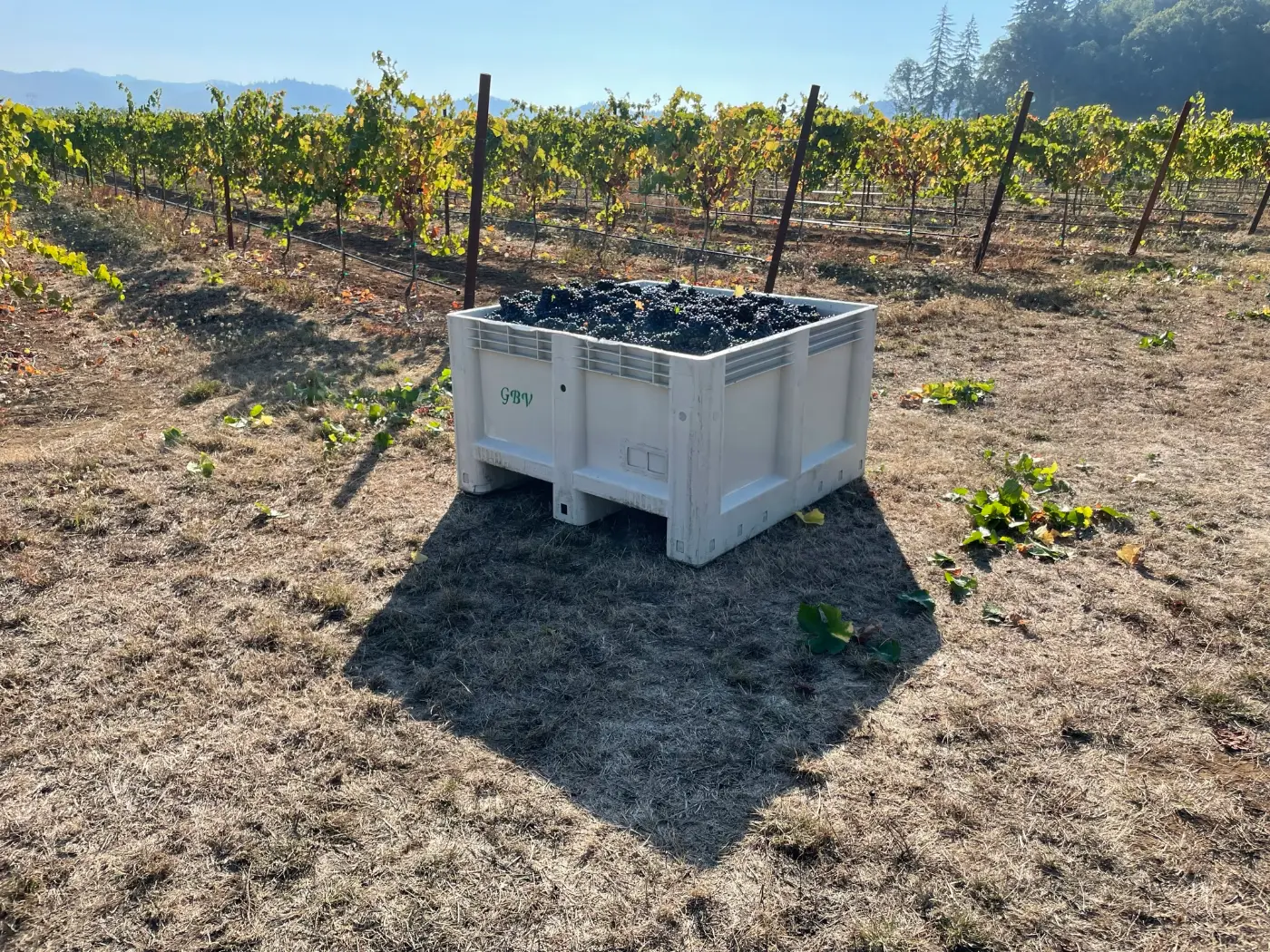
The other half of the climate story is timing. The Willamette Valley gets most of its rain between fall and spring, then settles into warm, dry summers. Harvest usually lands from mid-September into October, after a long run of mild days. For our 2024 Pinot Noir, picking ran from September 20 to October 15. That’s nearly four weeks of bringing in fruit block by block, each section picked when it was ready rather than all at once.
Dry summers are also what make dry farming possible here, which we’ll get to in a minute.
What the Soil Does
If climate is the tempo, soil is the rhythm section. Three main soil families run through the Willamette Valley’s hillsides, and each one leaves its own mark on the wine.
- Volcanic soils. The best known is Jory, a red, iron-rich soil formed from ancient basalt lava flows. You’ll find it across hills like the Dundee Hills. Pinot Noir grown in volcanic soil often shows bright red fruit and a silky texture.
- Marine sedimentary soils. Willakenzie and similar soils formed from ancient seabed, laid down when this part of Oregon sat underwater millions of years ago. They tend to drain well and are often associated with darker fruit and a little more structure.
- Laurelwood. This is windblown loess (fine, silty dust carried in by wind over thousands of years) sitting on top of a basalt base. It’s found in the northern hills of the valley, including the Chehalem Mountains. Wines from Laurelwood soils often combine the fruit of volcanic sites with a bit of extra depth.
None of these soils are especially rich, and that’s the point. A vine that has to work for water and nutrients puts more of its energy into a smaller crop of concentrated grapes instead of producing a lot of thin, diluted fruit. Low yields on tough-looking hillsides are usually a sign of a serious vineyard, not a struggling one.
For our 2024 Pinot Noir, the fruit came from vineyards on volcanic red soils and Laurelwood loess, between 350 and 600 feet in elevation. That elevation matters too: hillside vineyards drain well, catch good sun and sit above the coldest air that settles on the valley floor.
A Little History: How Oregon Bet on Pinot Noir
Oregon’s Pinot Noir story is younger than you might think. When the first wave of growers planted Pinot Noir in the Willamette Valley in the 1960s, plenty of people told them it was too cold and too rainy to make good wine. They planted anyway, on a hunch that a cool climate was exactly what this finicky grape needed. Over the following decades, the valley’s wines started holding their own against much more famous names, and the rest of the wine world began paying attention.
That pioneering spirit shaped the region’s culture, too. Oregon’s winegrowers have a long habit of sharing knowledge, swapping notes and caring for the land together. LIVE, a third-party sustainable winegrowing certification now used across the Pacific Northwest, was started by a small group of Willamette Valley growers in the late 1990s. Some of our own vineyard partners carry LIVE certification today.
Willamette Valley vs. Burgundy
Since the comparison comes up so often, here’s the quick version. Both are cool-climate regions built around Pinot Noir and Chardonnay, and both make wines with a structured, acid-driven style. The difference is mostly in the ground and the fruit. Burgundy’s best vineyards sit largely on limestone and clay, while the Willamette Valley’s hills are volcanic, marine sedimentary and loess. Oregon Pinot Noir also tends to show a little more open, generous fruit.
Our take: you don’t need to rank them. They’re cousins, not rivals. Burgundy is the grape’s ancestral home, and the Willamette Valley is one of the places that proved Pinot Noir could thrive somewhere new.
Dry-Farmed, Hand-Picked: What That Actually Changes
Bearboat doesn’t own a vineyard. We choose them, working with a small group of vineyard partners across the Willamette Valley, chosen site by site, and we walk those vineyards ourselves from bud break to harvest. That means our wine reflects a range of hillsides across the valley instead of one single address. You can read more about how we choose and work with our growers on our Our Story page.
Two things are non-negotiable for every vineyard we source from:
- Dry-farmed. No irrigation. The vines live on winter rain stored deep in the soil, so their roots have to dig down to find it. That pushes the vine to grow a deeper root system and a smaller, more concentrated crop. It’s harder farming, and it works here because of the valley’s wet winters and water-holding soils.
- Hand-picked. Pickers move through the rows by hand, which lets them leave underripe or damaged clusters behind in the field instead of relying on a machine to grab everything. It’s slower and costs more, and it’s one of the clearest ways to get clean, healthy fruit to the winery.
Neither of those is a marketing flourish. Dry farming stresses the vine in the useful way described above, and hand-picking is simply a more careful way to bring in fruit. Both are part of why a well-made Oregon Pinot Noir has a real story behind it, and why it’s worth a spot on the table on an ordinary weeknight, not just on a holiday.
How Our 2024 Pinot Noir Comes Together
Here’s what happened to the fruit once it left the vineyard, for anyone who likes the behind-the-scenes details.
- Where it’s from: half from the Chehalem Mountains, half from the wider Willamette Valley, off vines averaging around 20 years old.
- The grapes: a blend of Pinot Noir clones (different strains of the same grape, each with its own personality): Pommard, 777, 115 and 667.
- In the cellar: fermented in open-top fermenters with 25% whole clusters (grapes left on their stems, which adds lift and a little spice), with 14 days on the skins for color and texture.
- Aging: ten months in French oak barrels, only 25% of them new, then five more months resting in bottle. The light touch of new oak lets the fruit lead.
- Finishing: unfined, dry, 13.8% alcohol and sealed under screwcap, so there’s no hunting for a corkscrew at the campsite.
We made 2,010 cases. That’s a small production by most standards, which is part of why smaller wine brands like ours can take a little looking to find. We’ve got you covered on that front: our store and restaurant locator shows where Bearboat is pouring near you.
What It Tastes Like in the Glass
Pour a glass of our 2024 Bearboat Pinot Noir and you’ll find dark cherry and black raspberry over a silky texture, held up by balanced acidity. The tannins (the drying, grippy feeling red wine can leave on your gums) are easygoing, so it drinks smoothly on its own and doesn’t fight with food. That combination of bright fruit and gentle structure is the Willamette Valley signature in a nutshell.
It’s also earned a little hardware for the mantel: a Gold Medal and 95 points at the 2026 New York International Wine Competition. You can check the official 2026 winners list for yourself.
How to Serve It
Willamette Valley Pinot Noir tastes best a little cooler than room temperature, around 55 to 60°F according to Wine Folly’s serving temperature guide. If the bottle has been sitting on a warm kitchen counter, give it 15 to 20 minutes in the fridge before you pour. Warm red wine tastes flat and boozy; a slightly cool one tastes bright and fresh. You don’t need a decanter or fancy glassware. A regular wine glass, or honestly a camp cup by the fire, does the job.
Still have questions about the basics, like whether Pinot Noir is dry or how long an open bottle lasts? We answered the most common ones in Pinot Noir Questions You’re Too Embarrassed to Google.
What to Eat With It
Willamette Valley Pinot Noir is one of the most food-flexible red wines you can buy, thanks to that bright acidity and soft tannin. A few pairings that never let us down:
- Cedar-planked salmon. A Pacific Northwest classic, and one of the few fish dishes that a red wine handles beautifully.
- Pork tenderloin over lentils. Lean, savory and earthy, right in Pinot’s comfort zone.
- Anything with mushrooms. Risotto, a mushroom pizza, a skillet of sautéed chanterelles on toast.
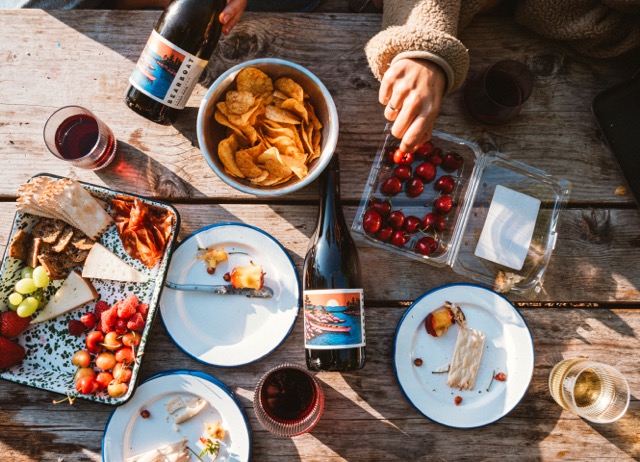
- A charcuterie board. Prosciutto, a mild salami, a soft cheese and some good bread.
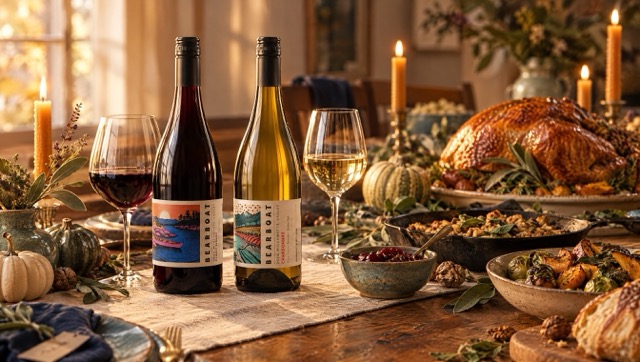
- Roast chicken or turkey. Which is why Pinot Noir earns a spot on the holiday table, too. Our Thanksgiving wine guide covers the whole plate.
For the full rundown, see The Best Foods to Pair with Oregon Pinot Noir.
How to Spot a Good Willamette Valley Pinot Noir on the Shelf
You don’t need to memorize vintages or vineyard names to shop well. A few label clues go a long way:
- Look for “Willamette Valley” on the label. A bottle that names the region (or one of its sub-regions) tells you where the fruit came from. A label that only says “Oregon” could draw from anywhere in the state.
- Check the alcohol. Most Willamette Valley Pinot Noir lands somewhere in the 13 to 14% range, a sign of a fresher, cool-climate style.
- Read the back label. Words like dry-farmed, hand-picked or the names of specific hills tell you a producer is paying attention to the vineyard.
- Don’t only reach for the names you know. The valley has hundreds of producers, and some of the most fun bottles come from smaller labels you haven’t heard of yet. Finding one is half the adventure.
Price-wise, there’s a real range. You’ll see collectible single-vineyard bottles priced for the cellar, and you’ll also find well-made everyday-premium bottles that are built for an ordinary dinner rather than a special occasion. That second group is where Bearboat lives.
Why We Built Bearboat Around This Valley
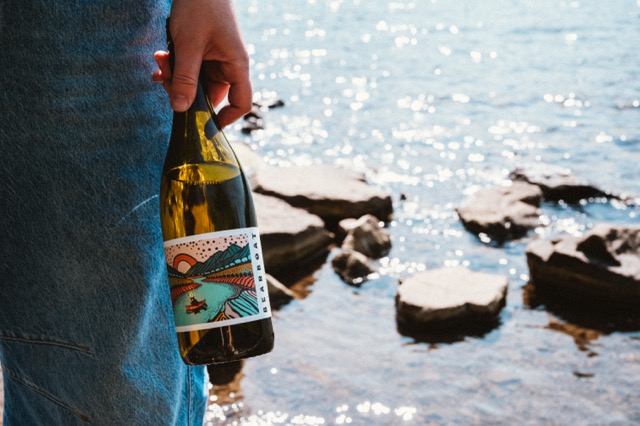
Bearboat started in the mid-1990s in Sonoma County as a heritage label with engraved bears in a rowboat. When we brought the brand to Oregon, we brought Mac and Zeke along with it, and pointed the boat at the Willamette Valley. The reason is everything in this post: cool nights, hard-working soils, a community of growers who care deeply about their land, and a grape that rewards all of it.
The other reason is simpler. Willamette Valley Pinot Noir tastes like it was made to go with dinner. It’s the bottle you open with friends around a table or a fire, not the one you save for a someday that never quite arrives. That’s what “Adventure in Every Sip” means to us: discovering something good and sharing it any night of the week.
Taste the Valley for Yourself
That’s the science. The short version is simpler: cold nights, tough soil and growers willing to pick by hand. The best way to understand it is to pour a glass. Take a closer look at our 2024 Pinot Noir and its partner, our 2024 Chardonnay, or browse both of our wines. When you’re ready, find a bottle near you. Cheers to your next adventure, wherever the trail leads.