Drive three hours south from Portland and the Pinot Noir changes character. Same grape, same state, different conversation.
Mac and Zeke have roamed both. The Willamette Valley vs. Umpqua Valley comparison matters because Oregon Pinot Noir isn’t one style — it’s an argument between climate, elevation and soil that resolves differently depending on where you stand.
Here’s what each valley brings, and what that has meant in our own bottles.
Willamette: cool, slow, and structured
The Willamette Valley runs cool and maritime. Fruit ripens slowly, which preserves acidity even at full ripeness.
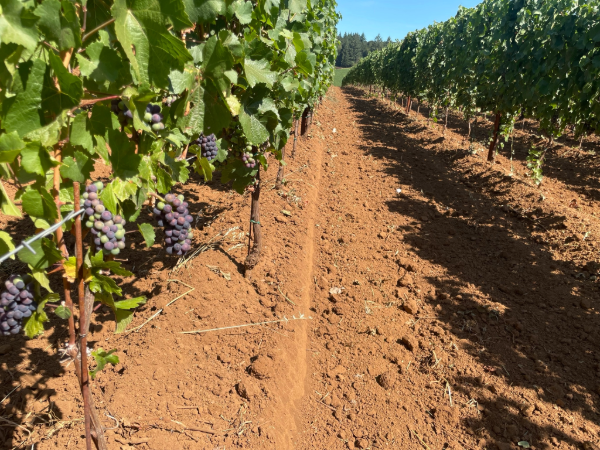
The soils split roughly between volcanic reds and marine sedimentary ground, with Laurelwood loess layered over parts of the northern valley. Our 2024 Pinot Noir comes off vines between 350 and 600 feet, split evenly between the Chehalem Mountains and the wider valley.
What that produced in 2024: dark cherry and black raspberry, a silky, smooth texture, and balanced acidity that keeps the whole glass bright and food-friendly.
Umpqua: warmer, higher, rounder
Head south and the Umpqua Valley sits warmer, with wider swings between day and night temperatures and vineyards climbing considerably higher — up to 1,200 feet in the sites Bearboat has worked with.
Warmth tends to bring riper fruit and a rounder, softer middle. The big swing between warm days and cool nights is what lets that fruit hold on to its acidity.
Our 2023 vintage was an even split, half Umpqua Valley fruit and half Willamette Valley fruit, and it showed raspberry, cherry and warm baking spice, with a medium body and a silky finish.
Where Bearboat sources now
Worth being precise, because vintages differ.
The 2023 Pinot Noir was 50% Willamette Valley and 50% Umpqua Valley — which is why that bottle carries the broader Oregon appellation.
From 2024 forward, we source 100% from the Willamette Valley. The 2024 Pinot Noir is split evenly between the Chehalem Mountains and the wider valley, and carries the Willamette Valley appellation.
We don’t farm our own ground. We work with vineyard partners we choose ourselves, which means we can follow the fruit rather than defend a plot of dirt because we happen to own it.
How to taste the difference
Pour two Oregon Pinots side by side and start with feel before flavor: how the wine sits in the middle of your mouth.
Cooler sites tend to give more lift — acidity that runs through the middle and keeps the finish bright. Warmer sites tend to feel rounder and softer. Neither is better. They’re different answers to the same question Oregon keeps asking about what a patch of ground has to say.
Fruit is the trickier clue, and our own two vintages show why. The 2023, with Umpqua fruit in the blend, leaned raspberry and cherry. The all-Willamette 2024 runs darker, to dark cherry and black raspberry. The valley sets the frame; the site, the season and the cellar fill it in.
Then check the label for the appellation. Willamette Valley is narrow and specific. Oregon means the fruit crossed regions — often for good reason.
Taste the current vintage
Our 2024 Pinot Noir is the Willamette expression: dark cherry and black raspberry, silky across the palate, with balanced acidity keeping it bright. Built for a Tuesday rather than a pedestal.
See the full sourcing and winemaking detail on the 2024 Pinot Noir, or read what makes Oregon Chardonnay different for the white-wine side of the same story.